
Barcode Types Explained: EAN, UPC, Code 128, ITF and More
A plain-English guide to the main barcode formats: where they are used, how they differ, and which one to choose for retail, marketplaces, warehouses, shipping, or books.
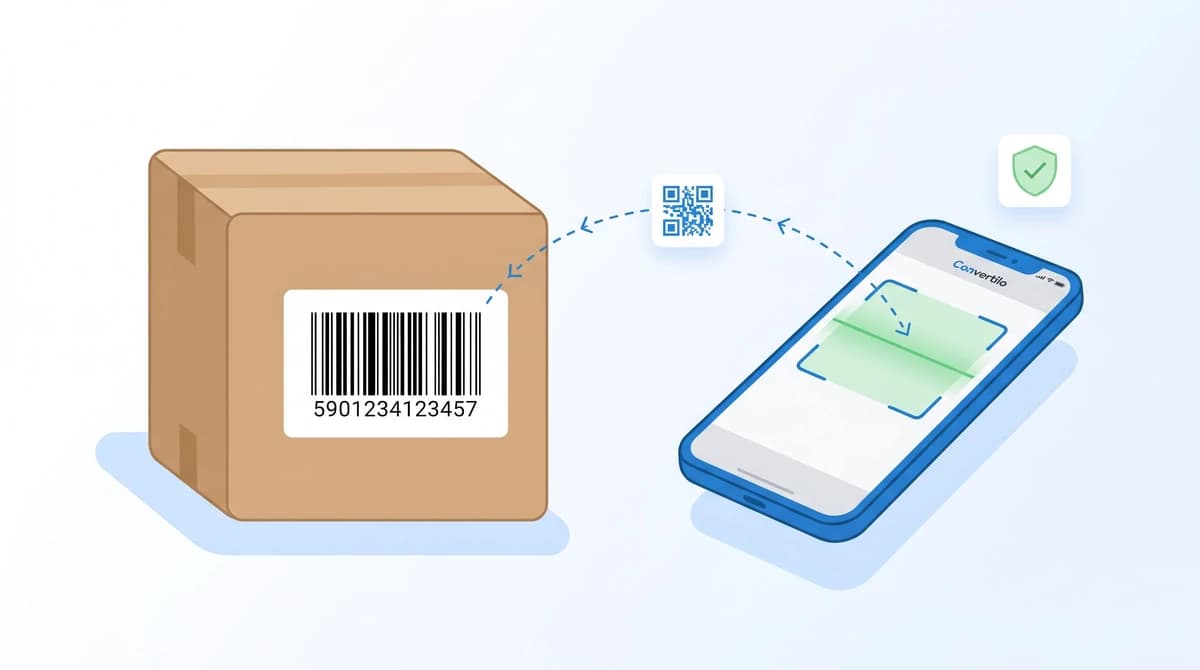
A barcode is a machine-readable way to encode a number or short string using lines of different widths. But “barcode” actually describes a family of standards: EAN-13 on retail products, Code 128 in warehouses, and UPC on North American goods may look similar, yet they encode data differently and serve different purposes. This guide explains the main formats so you can choose the right one.
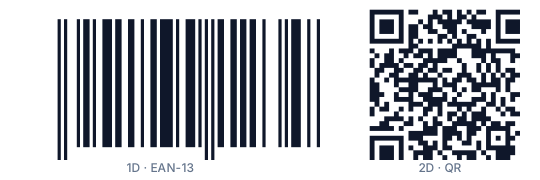
Linear (1D) vs two-dimensional (2D) codes
Linear codes are the familiar barcodes made of vertical bars, such as EAN-13, UPC, and Code 128. They typically hold between 8 and roughly 80 characters and can be read by standard barcode scanners and modern phone cameras. Their main advantages are compact size and broad compatibility with retail and logistics equipment.
Two-dimensional codes such as QR, Data Matrix, PDF417, and Aztec are square or rectangular patterns made of small modules. They can hold far more data—up to several kilobytes—can be read from different angles, and may remain readable even when part of the symbol is damaged. QR is the most familiar format, while Data Matrix is widely used on small products, electronic components, and medical devices.
The Convertilo barcode scanner reads both types: EAN, UPC, Code 128, Code 39, and ITF (1D), as well as QR, Data Matrix, PDF417, and Aztec (2D).
EAN-13 and EAN-8 — retail products worldwide
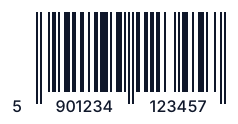
EAN-13, now officially part of the GTIN system, is the main retail barcode format across Europe and much of the world. It contains exactly 13 digits: a GS1 company prefix, an item reference, and a check digit. The prefix identifies the GS1 member organization that issued the number, not necessarily the country where the product was made.
Retailers and marketplaces commonly ask for a GTIN such as EAN-13 when you create a product listing. You normally obtain official numbers through GS1. A warehouse may also use Code 128 for its own internal SKU, but an internal code does not automatically replace a GTIN where a marketplace requires one.
EAN-8 is an eight-digit version intended for very small packaging, such as sweets or cosmetics, where a full EAN-13 symbol would not fit. It is less common and its numbers are also allocated through GS1.
UPC-A and UPC-E — United States and Canada
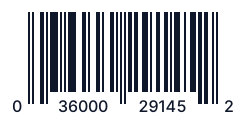
UPC-A (Universal Product Code) is the 12-digit retail format most commonly used in the United States and Canada. If you sell through Amazon US or to North American retailers, a UPC-A is often the GTIN format you will encounter.
UPC-E compresses eligible UPC-A numbers into a smaller symbol for compact packaging. EAN and UPC belong to the same GS1 system, and most modern checkout scanners read both automatically. A UPC-A can also be represented as an EAN-13 by adding a leading zero.
Code 128 — warehouses, logistics, and tickets
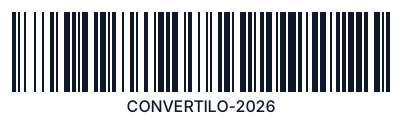
Code 128 is one of the most versatile 1D formats. It can encode the full ASCII character set, including letters, numbers, and punctuation, rather than digits alone. Its efficient character sets make it more compact than Code 39 for the same data.
Typical uses include warehouse labels, shipping documents, GS1-128 logistics labels with Application Identifiers, tickets, employee badges, batch numbers, and serial numbers. It is an excellent choice for an internal SKU, order number, or asset ID that does not need to be a retail GTIN.
Code 39 — manufacturing, automotive, and government
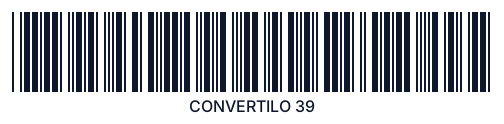
Code 39 is an older but still widely supported format. It encodes uppercase letters A–Z, digits 0–9, and a small set of symbols. Its biggest advantage is simplicity: almost any barcode equipment, including older scanners, can read it.
It is used for automotive parts, industrial inventory, defense and government documents, libraries, and some healthcare records. Code 39 requires more space than Code 128 for the same amount of data, so new systems often prefer Code 128.
ITF and ITF-14 — cartons and shipping cases
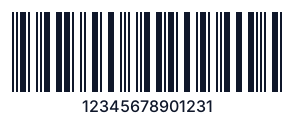
ITF-14 (Interleaved 2 of 5, 14 digits) is used to identify trade-item groupings such as cartons and shipping cases. It represents a GTIN-14, which includes a packaging-level indicator, the item reference, and a check digit.
Standard ITF can encode an arbitrary even number of digits. Its wide bars tolerate lower-quality printing on corrugated cardboard, which is why the format remains common when a barcode is printed directly onto a shipping carton.
QR Code and Data Matrix — links and product marking
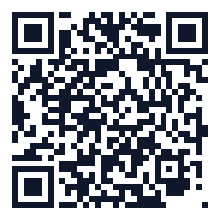
QR Code is the best-known 2D format. It can encode up to 4,296 alphanumeric characters and is readable by virtually any smartphone. Common uses include links, Wi-Fi credentials, payments, tickets, and contact cards (vCard).
Data Matrix is a compact 2D symbol with an L-shaped finder pattern. It is well suited to very small items and direct-part marking, so it is widely used for electronics, medical devices, pharmaceuticals, and regulated product traceability. The exact data and registration requirements depend on the industry and country.
How to choose the right barcode
Selling a retail product or listing it on a marketplace → use the GTIN format required by the retailer, usually EAN-13 or UPC-A.
Labelling warehouse cartons and pallets → use ITF-14 for trade-item groupings or Code 128 / GS1-128 for order and logistics data.
Creating a ticket or access pass → choose Code 128 for a compact identifier, or QR Code when you need a URL or more data.
Meeting a regulated traceability requirement → use the format specified by the regulator, often GS1 DataMatrix or another Data Matrix profile.
Sharing a link or Wi-Fi credentials → use QR Code.
Use our online generator to create EAN-13, Code 128, UPC, and other formats, or scan a barcode from a photo or camera with our scanner.
Frequently asked questions
Which barcode do I need for Amazon or another marketplace?
Most marketplaces ask for a valid GTIN when you create a retail product listing—typically a UPC-A in North America or EAN-13 in many other markets. Requirements and exemption programs vary by platform and category, so check the marketplace policy first. Code 128 is useful for internal SKUs and warehouse labels but does not replace an official GTIN when one is required.
How do I get an EAN-13 for my own product?
Official GTINs, including EAN-13 numbers, are licensed by GS1 through its local member organizations. You register your company and receive a company prefix or individual GTINs, depending on the local service. A barcode image generated from a number does not by itself register or assign that number.
What is the difference between a barcode and a QR code?
A traditional 1D barcode uses vertical bars and usually stores a short identifier. A QR Code is a two-dimensional grid that can hold much more data—up to 4,296 alphanumeric characters. QR codes can be read from different angles and include error correction, while a 1D scanner needs a clear scan line across the bars.
Can I use generated barcodes for commercial printing?
Yes, you can download PNG or SVG symbols from our generator and print them on labels or packaging. Make sure the encoded value is yours to use: retail GTINs such as EAN and UPC are assigned through GS1, and some regulated uses have additional registration and print-quality requirements.
Can I scan a barcode from a product photo?
Yes. Our barcode scanner works with both a live camera and existing images: upload a photo or screenshot and the tool will try to decode it. For the best result, use a sharp image with good contrast and keep the entire barcode visible and reasonably straight.